
Connecting LINE Official Account and Facebook Messenger to a customer relationship management (CRM) system helps businesses manage conversations and customer information across channels. Reliability depends on the entire journey, from a customer opening a membership link to the use of their data for segmentation and messaging in line with their preferences and permissions.
Announcements from LINE and MarTech providers in early October 2026, together with a data protection enforcement case, highlight several priorities for CRM and customer data platform (CDP) development: maintaining API integrations, synchronizing consent and marketing preferences, and monitoring data quality at the source.
LIFF Updates Can Affect Links to Your Member Portal
LIFF, or LINE Front-end Framework, enables web applications to work with LINE. Common uses include member portals, loyalty point pages and campaign participation.
On October 7, 2026, LINE released LIFF 2.31.2, changing how the ? character is handled within query parameter values in the LIFF browser. The character is no longer converted to & during the redirect process. This can affect parameters containing another URL, such as return_url, as explained in the LIFF release notes.
Consider a customer who opens a message to redeem loyalty points, signs in, and then returns to the original redemption page. If the return link is interpreted incorrectly, they may reach the wrong page or be unable to continue. Development teams should test this journey on both iOS and Android, opening links from LINE and from external applications.
Applications using the CDN edge path receive the latest version automatically. Those using a fixed version or an npm package require a manual update. LINE also announced on September 30, 2026, that LIFF versions 2.20.0–2.31.0 had been deprecated because of an issue with potential security implications, advising an immediate update to 2.31.1 or later. Version checks and link testing should therefore be part of ongoing member portal maintenance.
Consent and Marketing Preferences Must Reach the Systems That Use Customer Data
Consent management covers the recording of permitted purposes and the handling of consent withdrawals. A CRM operating across multiple channels should also support requests to stop marketing, whether a customer changes their profile settings or contacts a service agent.
The BBVA case in Italy illustrates the risk of disconnected systems. A Garante decision dated September 3, 2026, imposed a €5.508 million fine after a customer continued to receive commercial notifications despite objecting to marketing. The case involved a failure to synchronize the customer’s preference between internal systems and the CRM unit. It concerns enforcement of existing GDPR obligations, as documented in the original Garante decision.
For CRM and CDP design, a preference change in a customer profile should also affect audience segments and queued campaigns. If a customer opts out after a campaign audience has been generated, the sending process should check their current preference again rather than rely on an outdated list.
Practical improvements include recording preference changes with their timestamps, purposes and request channels; tracking synchronization to each destination; and distinguishing service messages from marketing messages according to their purpose. These measures can make a Customer 360 profile more useful by showing both customer information and the restrictions on how it may be used.
LINE Integrations Need a Plan for Service Outages
On October 6, 2026, LINE reported a LINE Platform outage affecting Messaging API, LINE Login, LIFF and other services, and confirmed that the issue had been resolved. Details are available in the LINE Developers announcement.
The incident provides a useful scenario for CRM teams to prepare for. If a Shared Inbox cannot receive or send messages, administrators should be able to distinguish a provider outage from an authorization issue or an incorrect account configuration. That distinction helps them choose the right response.
A connection health view can show the latest successful operation and any pending work. Retries should follow the requirements and limits of each API endpoint, with safeguards against duplicate processing. This is particularly important for actions that change loyalty points or record mission completion: one event should produce its intended business result only once.
First Party Data Quality Starts at the Source
First-party data comes directly from a business’s interactions with its customers, such as membership registration, website activity or participation in a campaign. It helps CRM and CDP systems understand customers and build more useful segments. Its completeness matters for campaign planning and behavioral analysis.
On October 7, 2026, Tealium released utag.js 4.55, adding execution success metrics and error diagnostics for Tag Monitoring. The monitoring feature remains in Early Access and requires a supporting template. Further details are available in the Tealium release notes and Tag Monitoring documentation.
CRM teams can apply a similar approach to their Data Source views by displaying pixel or SDK health alongside the number of events received and processed. When event volume falls, the team should be able to investigate whether website traffic has decreased, the data collector has failed, or collection has been withheld because of consent preferences.
Showing the SDK version, the latest successful data transmission and relevant diagnostic errors can help teams resolve problems sooner. Diagnostic collection should also be limited to what is necessary, with appropriate access controls and retention periods.
Development Priorities for Businesses Using Multiple Channels
Businesses can start with four connected improvements:
- Check LIFF versions and test member portal links after sign-in.
- Test marketing opt-outs across Customer 360, the CDP and campaign queues.
- Review API outage handling and prevent duplicate loyalty point or activity updates.
- Add pixel and SDK health information to help explain missing data.
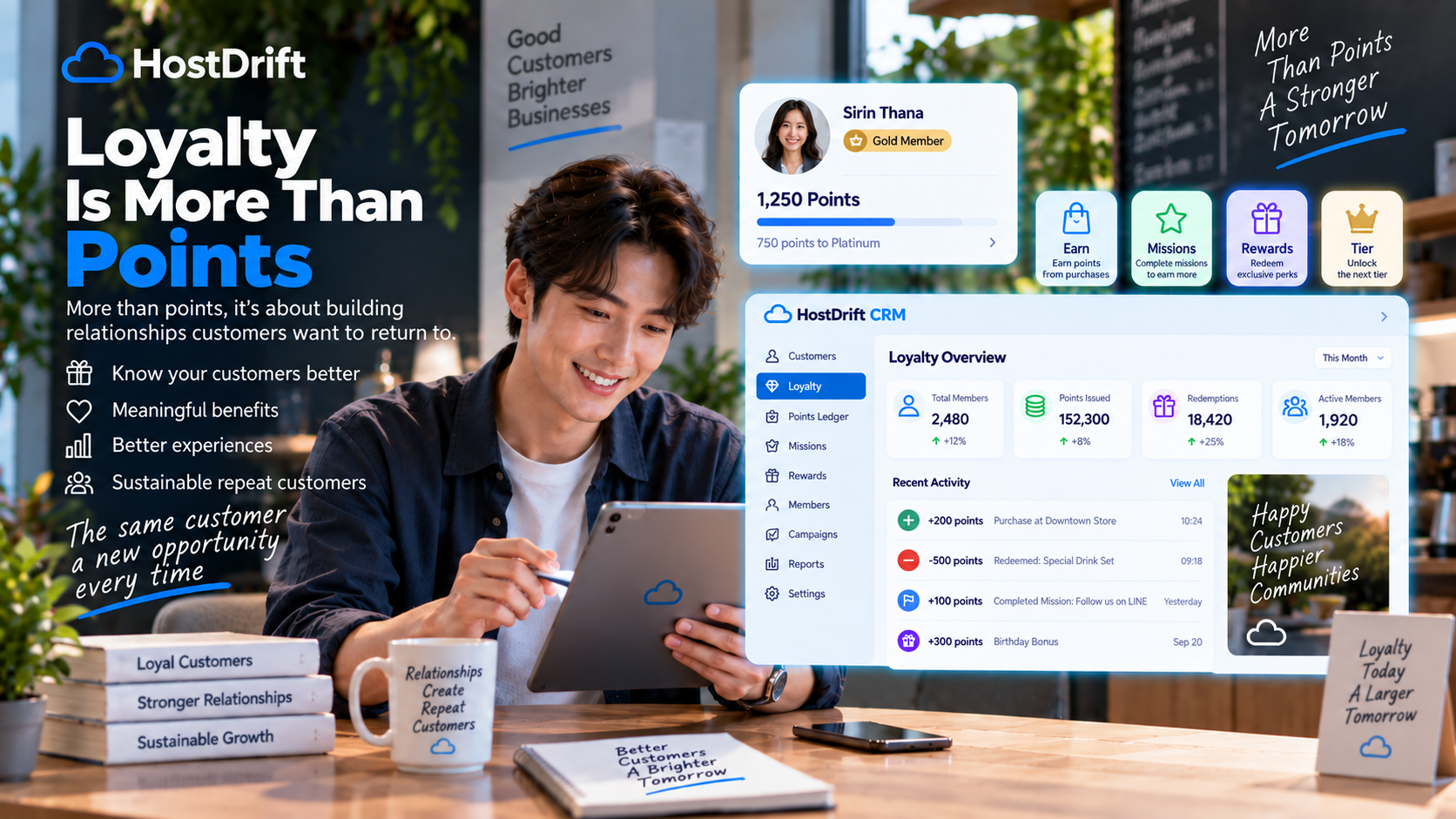
When planning a platform such as HostDrift, customer experience, data integration and respect for customer data preferences should be designed together. Connecting LINE Official Account, Facebook Messenger and a CDP can then support consistent work with customer information as the underlying services evolve.