Over the past several years, I’ve had the opportunity to work across different areas of business, including Digital Marketing, CRM, Customer Data, Marketing Technology, Business Operations, and system development.
The more systems I worked with, the more I noticed one recurring problem.
Many businesses do not actually suffer from a lack of software.
In many cases, the real problem is that they already have too many systems — and those systems do not communicate with each other.
Customer information may live in one platform.
Conversations are stored somewhere else.
The sales team maintains its own files.
Marketing has another set of data.
Consent and privacy information may be managed separately.
Documents, payments, inventory, and operational data often sit in completely different systems.
In the end, instead of software connecting the business, people become the ones manually connecting everything together.
That was one of the starting points behind HostDrift.
It Didn’t Start with the Idea of Building a SaaS Business
When I first started working on these systems, I did not begin with the idea:
“I want to build a SaaS platform.”
The question was much simpler:
If I could redesign the systems around the problems I had experienced in real work, could the workflow be made simpler and more connected?
While working with CRM, I saw customer information spread across multiple channels, while teams struggled to see the full picture in one place.
In Digital Marketing, I saw large amounts of behavioral data being collected, but much of it never reached the people who could actually use it.
When working with Customer Data, I saw the same customer represented by different identities across different systems.
And as more customer data became connected, another important question became impossible to ignore:
What data are we actually allowed to use, and for what purpose?
So I started turning these real-world problems into systems, one piece at a time.
Instead of starting with:
“What features should I build?”
I started with questions such as:
What are people actually doing in their daily work?
Where does the data come from?
Who needs to use that data next?
Which steps are still manual?
And most importantly:
Where does the workflow break in real business operations?
From the First CRM to a Connected Platform
One of the first areas I focused on was CRM.
CRM sits close to the point where teams actually interact with customers — receiving messages, following up on leads, managing sales opportunities, assigning tasks, and building customer relationships.
But as I developed the CRM further, it became clear that CRM alone could not solve everything.
A CRM may know what a sales or service team discussed with a customer, but it may not know what the customer viewed on the website before starting that conversation, which content they engaged with, or what behavioral events happened elsewhere.
That led to the development of HostDrift CDP — Customer Data Platform.
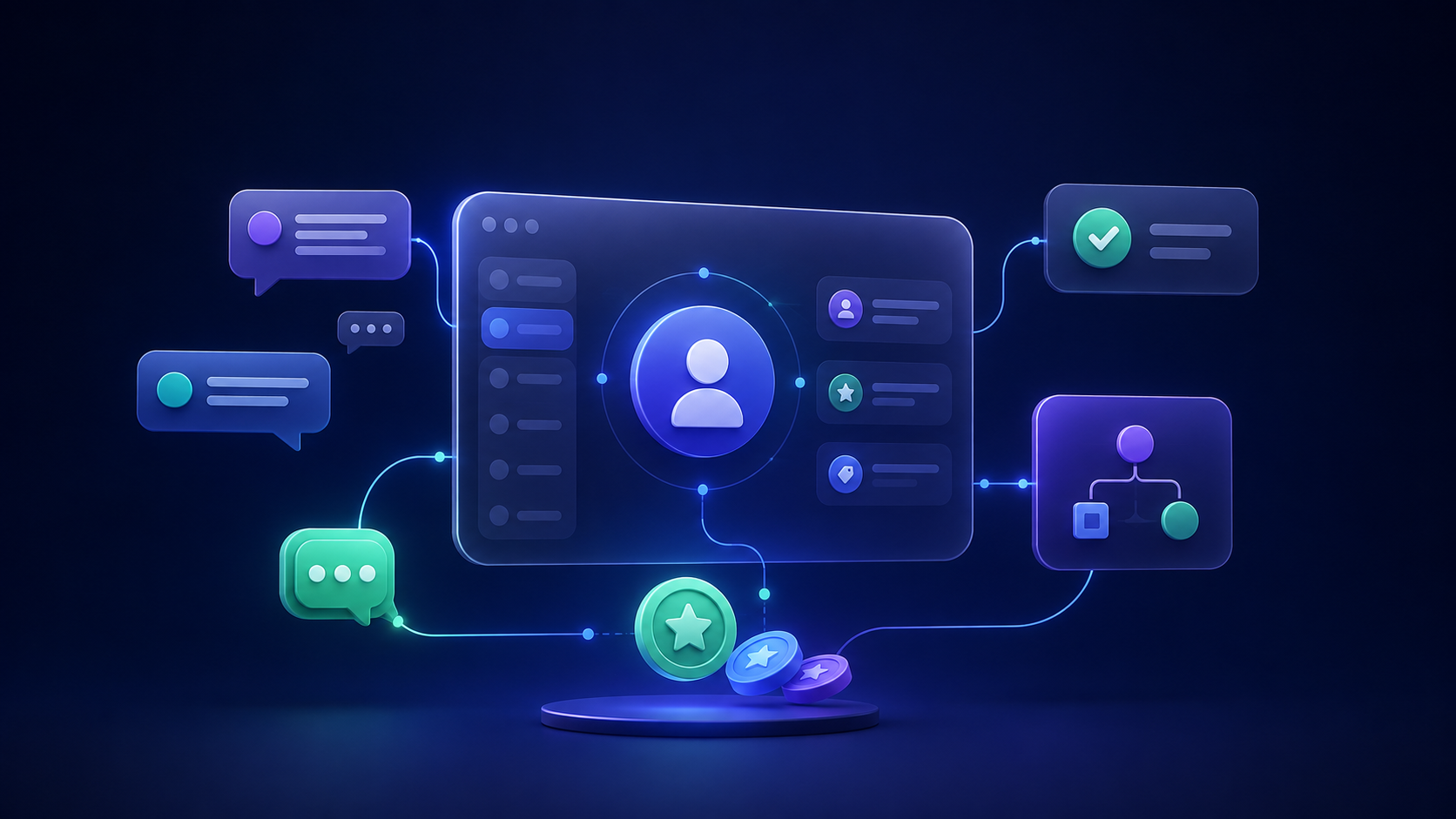
The goal of the CDP is to bring together Customer Profiles, Behavioral Events, Website Signals, and data from different sources so that customer information can be understood as a more complete picture.
But once more data becomes connected, the next question immediately appears:
Do we have permission to use that data for the intended purpose?
That is where HostDrift Consent became another important part of the platform.
The Consent platform is designed to manage consent records, preferences, and privacy signals, while allowing that information to work together with other customer platforms.
Today, I no longer think of CRM, CDP, and Consent as three completely separate products.
They are increasingly becoming different parts of the same customer data workflow.
CRM manages customer-facing operations and relationships.
CDP helps connect and organize customer data from different sources.
Consent helps define how that data can be used responsibly.
Why Add Quotation and Inventory?
As I started looking beyond customer-facing systems and more deeply into Business Operations, another pattern became clear.
The workflow does not end when the sales team talks to a customer.
After that, there are documents.
Quotations.
Invoices.
Payments.
Payment status.
Approvals.
And many other operational steps.
That led to the development of HostDrift Quotation, another part of the ecosystem focused on document and payment workflows.
At the same time, many businesses also need to manage more than customer data.
They have stock, equipment, assets, physical locations, checklists, inspections, and operational records.
This became the starting point for HostDrift Inventory.
Looking back, none of these platforms started from a large master plan.
They were more like individual pieces of a puzzle.
Each one came from a specific problem.
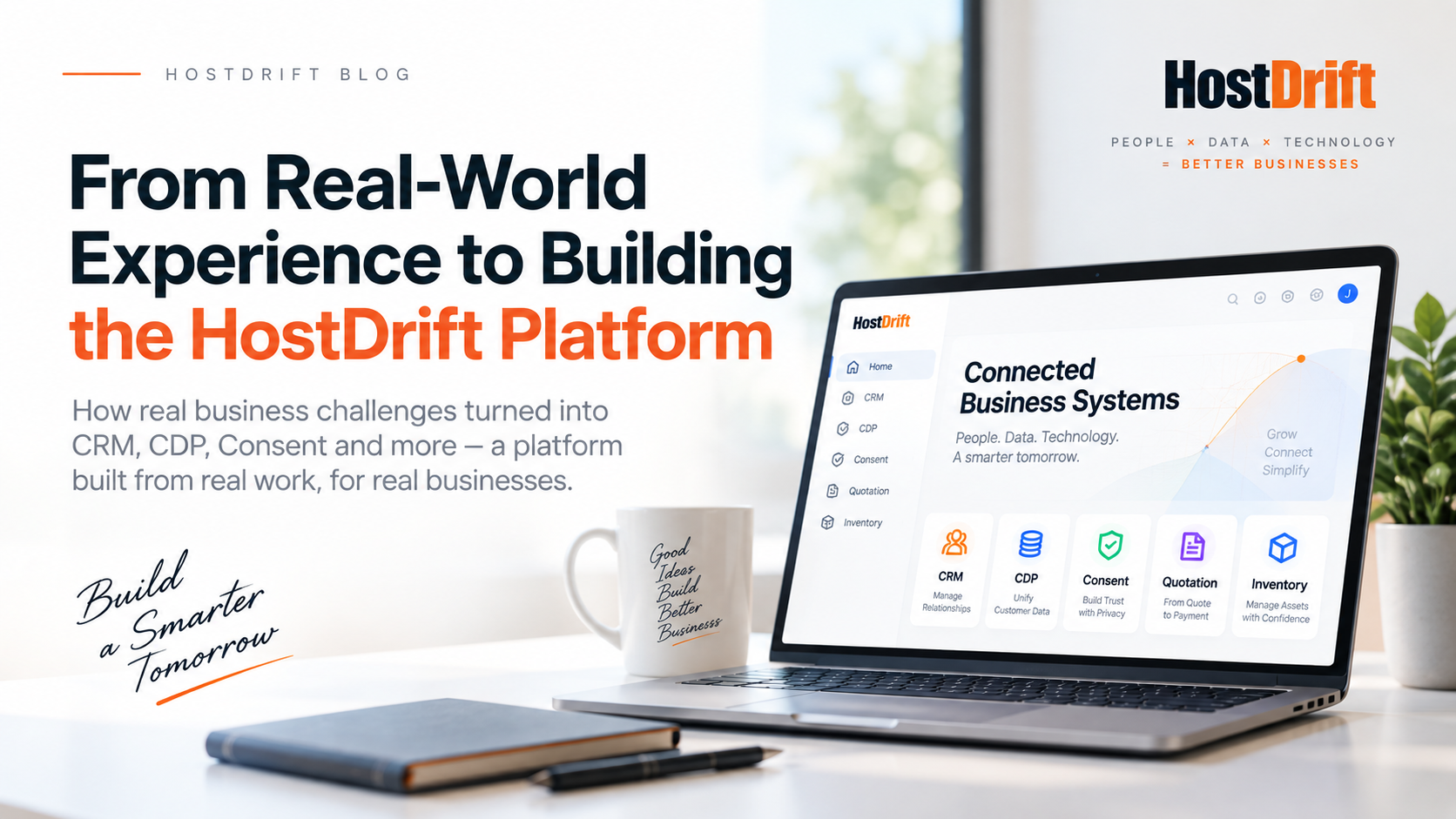
Over time, those pieces started to form a bigger picture: a set of Connected Business Systems that can share context and support different parts of business operations.
What I’ve Learned from Building These Systems Myself
For me, building these platforms has been valuable for more than just improving my programming skills.
It has forced me to look at the same business problem from multiple perspectives.
From a Marketing perspective, we want customer data that can help us communicate more effectively.
From a Sales perspective, we need to know where a lead is in the process and when the next follow-up should happen.
From a Customer Service perspective, we want the customer’s history available without opening several different systems.
From a Data perspective, we want information to be connected and identities to be consistent.
From a Privacy perspective, we need to understand what data can and cannot be used.
And from the perspective of the people who actually use the system every day, technology should make their workflow simpler — not more complicated.
Building these systems myself has required me to think about Business Logic, User Experience, Data Architecture, Integration, Permissions, Security, and long-term scalability at the same time.
Sometimes a feature that looks very small on one screen can affect several other parts of the platform behind the scenes.
That has been one of the most valuable lessons from building products rather than looking at technology from only one side.
HostDrift Is Still a Work in Progress
There is still a lot to build.
Some features are already available.
Some are still being improved.
And many ideas are still on the roadmap.
I do not believe that the systems I have built today are the final answer for every business.
My goal is to continue building platforms based on real operational problems, rather than simply adding features because other software products have them.
Because for me, good technology is not the system with the longest list of features.
It is the system that helps make:
data clearer,
workflows easier to continue,
and business operations more connected.
This article is the first in a series where I plan to share more about the systems I am building and the thinking behind them.
I’ll be covering CRM, Customer 360°, Shared Inbox, Sales Pipeline, Loyalty, CDP, Behavioral Data, Consent Management, Quotation, Inventory, and some of the architecture behind building multiple SaaS platforms that can work together.
Many of these ideas came directly from challenges I encountered in real work.
And many of them are still things I continue to learn from while building.
From real operational pain points to products that can actually be used — this is where HostDrift began.